
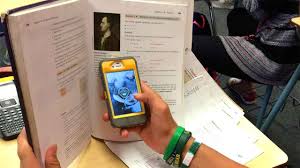
Educators hate cell phones. Even the most “chill,”– a group into which I would totally lump myself– finds themselves reprimanding students for technology based distraction on a semi-regular basis. And honestly, technology has changed the game in education because we as educators will never be as entertaining as the wide expanses of the internet at your fingertips.
A lot of [somewhat idealistic, if not incredibly naive] educators would tell you that we need to reinvent education to compete with this instant gratification machine that students carry in their pockets. Other [less idealistic, but equally naive] teachers would say that a zero-tolerance policy is the only thing that will assure student compliance and attention. Maybe they are right; maybe confiscating cell phones would result in compliance, but I would like to make the radical suggestion that the point of education is not compliance. It is creating functional citizens of the real world.
To that end, my dream school will not have either of these policies. When students are faced with the “real world,” it will take many forms: a conversation with a friend, instructions being given by a supervisor, feedback from a client. In none of those situations is it appropriate for our world citizens to be connected to their phones. Neither, however, will their conversational partner take it upon themselves to compete with a cell phone for attention. Nor will these individuals confiscate a cell phone to encourage focus. Therefore, we need to actively teach students to self-regulate their cell phone use.
This is where it becomes convenient that my dream school is a high school. It is for that reason that I can say that each student will start their career at my school by creating their own reflective cell phone policy. They will sit down with an advisor and discuss cell phone habits. They will make a plan for themselves and document their implementation of the plan. I think the most nebulous aspect of this policy is the original creation of the cell phone plan. In my mind, it could be something as simple as the following:
- I will keep my cell phone in the front pocket of my backpack when it is not in use.
- If my teacher allows me to, I will use my cell phone to listen to music, but I will keep it face down on my desk.
- I will only use my phone when I have all of my directions, and I am confident that I have the time and information I need to finish my assignment.
- I will not use my cell phone when I am supposed to be working in a group.
Ideally, this plan would solve the problem in its entirety, but I know that it will not in most (if not all) cases. If cell phone use becomes problematic, the student would follow up with their advisor.
Here is the general procedure for this process:
- All students create a plan with an advisor and document its implementation. Students are given freedom to make these decisions based on reflection on their cell phone use.
- Teachers will monitor student cell phone use, making note when it interferes with social interactions, task completion, collaboration, and other key aspects of learning (These will be clear in each classroom or maybe school-wide. The teacher council will decide.)
- Once a student’s cell phone use is seen to be problematic, they will meet with their advisor to re-address their cell phone plan. The advisor will lead this conversation, and students will have less freedom in the choices that are made.
- Teachers will continue to monitor student cell phone usage, and identify problematic cell phone relationships.
- Once students have been given the option to self-regulate two separate times, they will be asked to forfeit their phone to the front office for a set period of time. With each subsequent issue, this set period of time will increase.
 In my dream school...
I think you’re on to something here with a student-directed plan. Thanks for sharing.
LikeLike